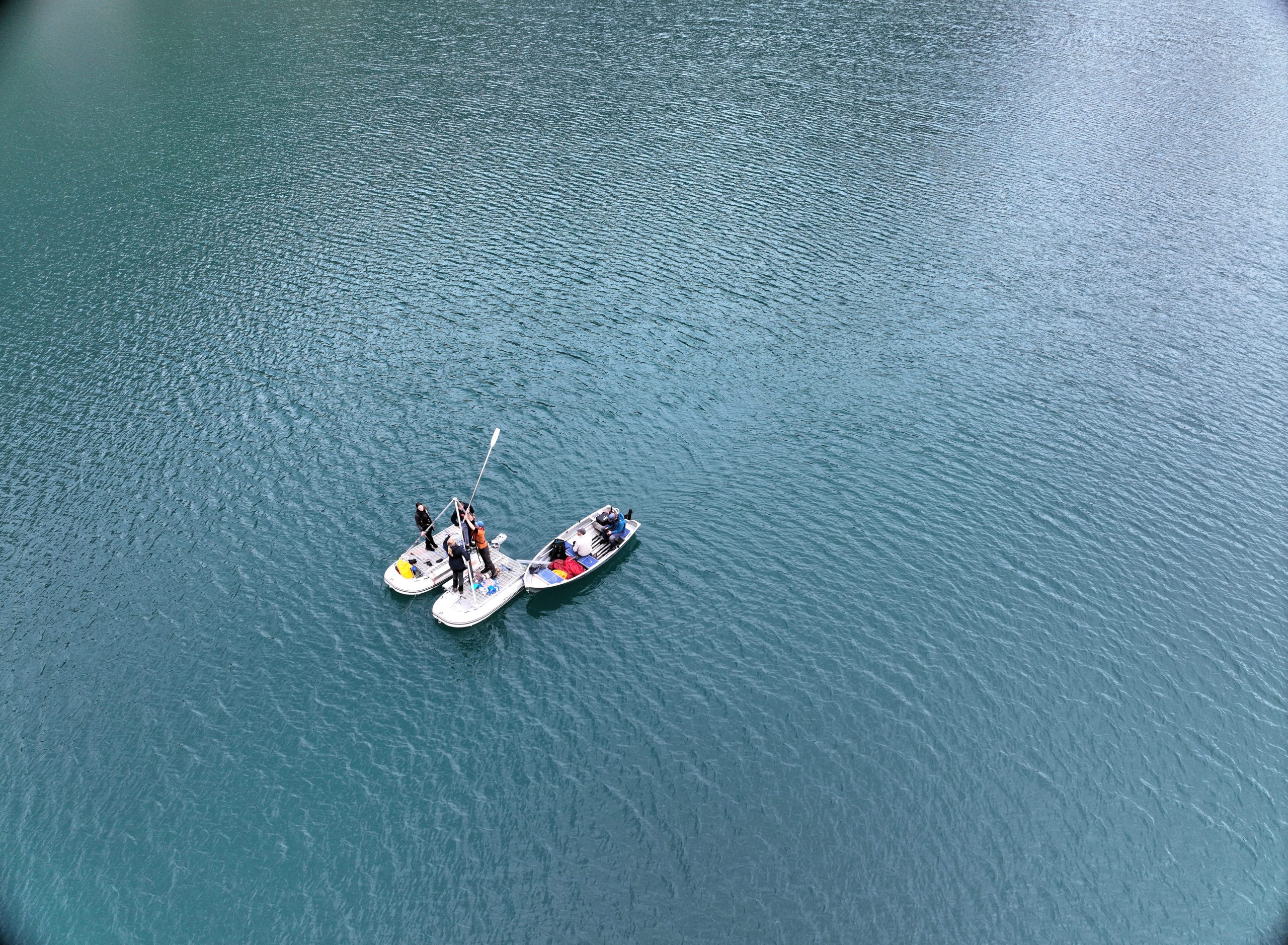
From the 8th to the 14th of August the four CMT PhD students Ardis, Polina, Fergus and Jesse went to northern Norway for fieldwork. The aim of this fieldwork was to collect sediment lake cores, sediment samples, and to make field observations. This data will be used for Jesse’s project to reconstruct the glacial activity of the Svartfjelljøkelen glacier during the last 4,000 years.
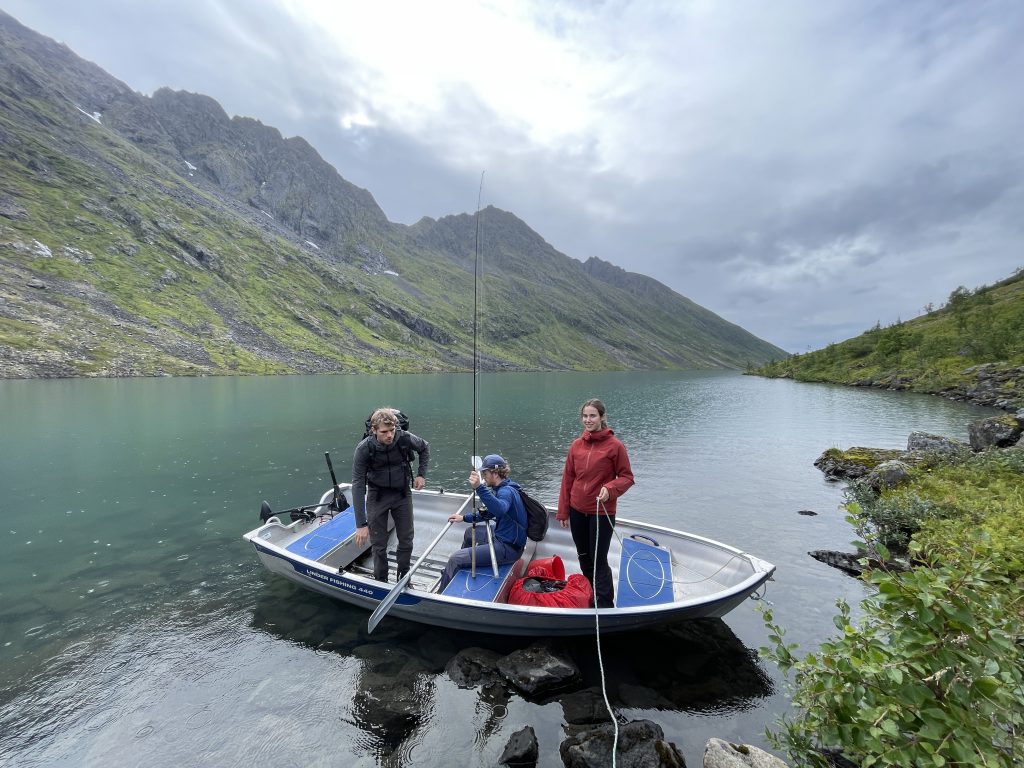
On the 8th of August we arrived in Øksfjord after three days of driving to take a 2-hour ferry to Bergsfjord, a small, secluded town with about 50 inhabitants. The first day in the field was aimed at exploring the field area and starting to collect the sediment samples. A small, three-kilometer hike had to be done to reach the sampling area. However, the terrain was not as easy to hike as expected and the students spent about three hours hiking. About halfway through, Ardis and Fergus turned around to see if one of the boats could be borrowed to cross the lake by boat instead of walking along. A couple of hours later Ardis and Fergus returned on a boat, that would be used for the rest of the week.
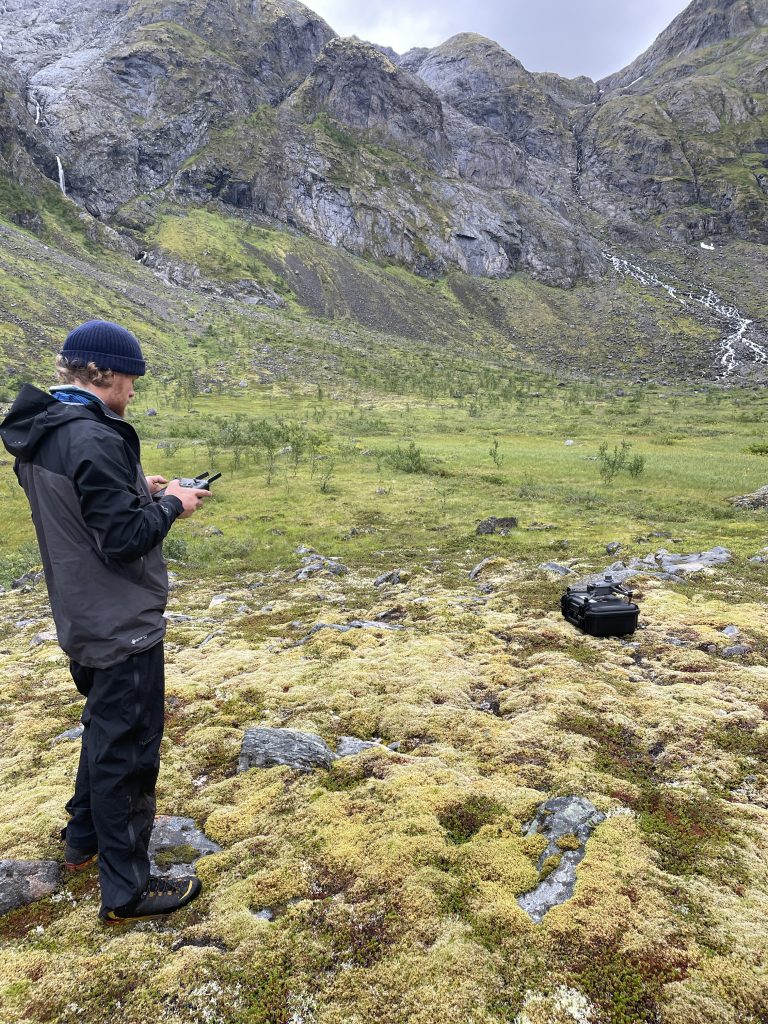
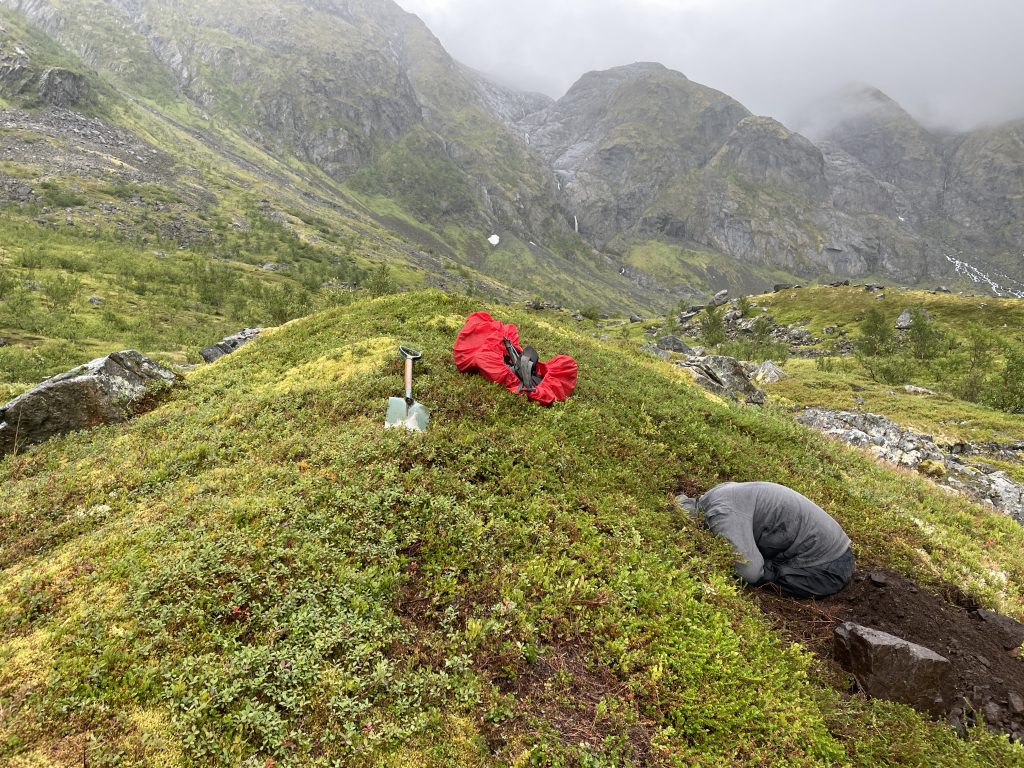
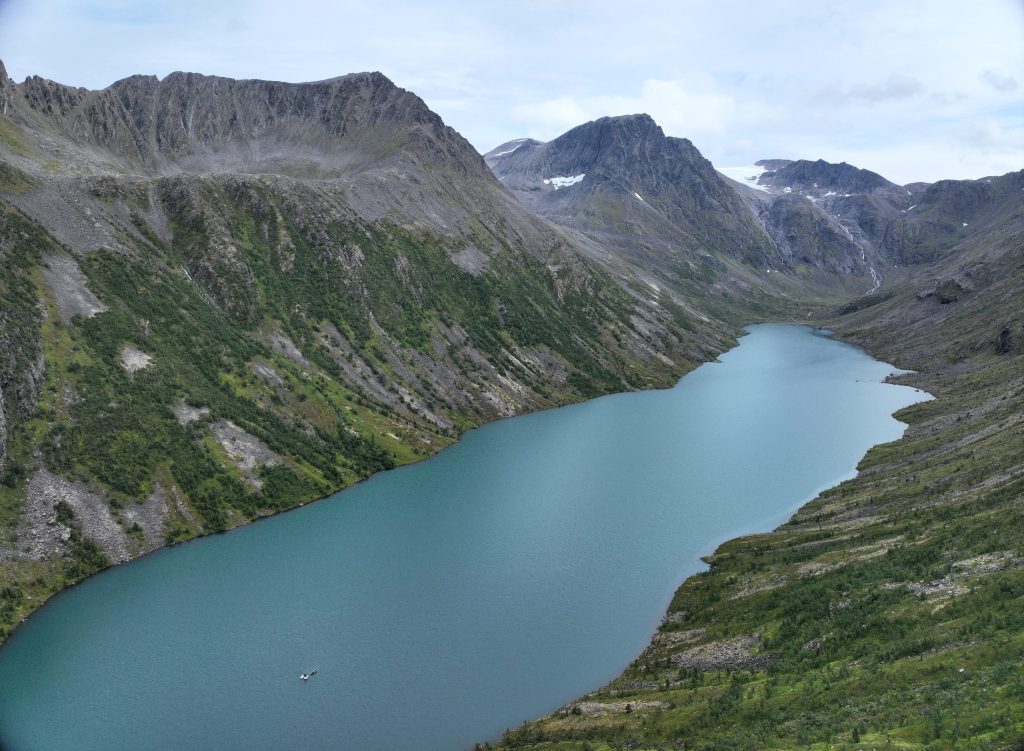
On the first five days of the fieldwork 35 sediment samples were collected. These samples will be used to fingerprint the sediments within the catchment to be able to relate the sediments in the lake core to certain processes. In addition, Fergus did two drone surveys, and lichenometry was performed. Based on the images taken with the drone, a high-resolution digital elevation model can be obtained, that will be used for improved Quaternary mapping. The Lichenometry was done to verify the ages of deposition of a number of glacier moraines.
Once returned after a long field day, Fergus and Jesse had several meetings with locals to try and get some more historic information on the glacier and the damming of the lake. This was also the time when some groceries could be bought from the friendly shop owner who opened his small butikk for us some evenings.
On day six, Jostein and Øyvind joined the PhD-students for a quick but efficient coring campaign. This was easier said than done. The trailer with the coring equipment had to be driven up to the lake. The rental van could not do this because of the steepness and roughness of the road. Luckily, in the morning we found a friendly man with a quad who helped us getting the trailer to the lake. We managed to take four gravity cores in the lake in what was according to Øyvind: “One of the most efficient coring campaigns I have experienced”.
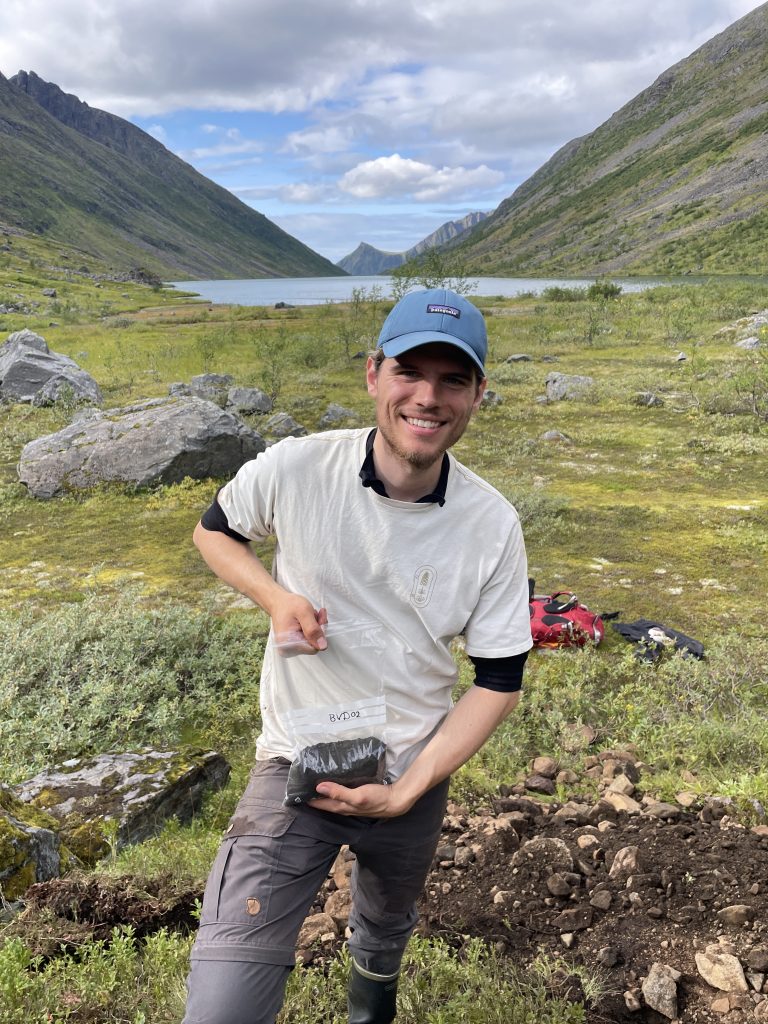
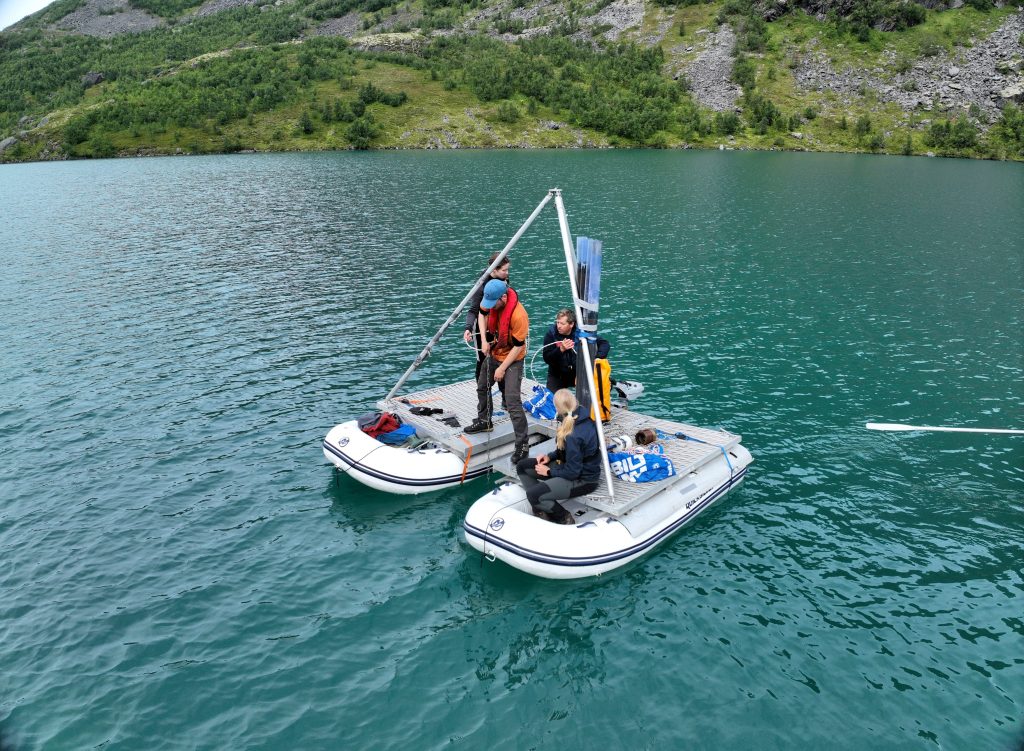
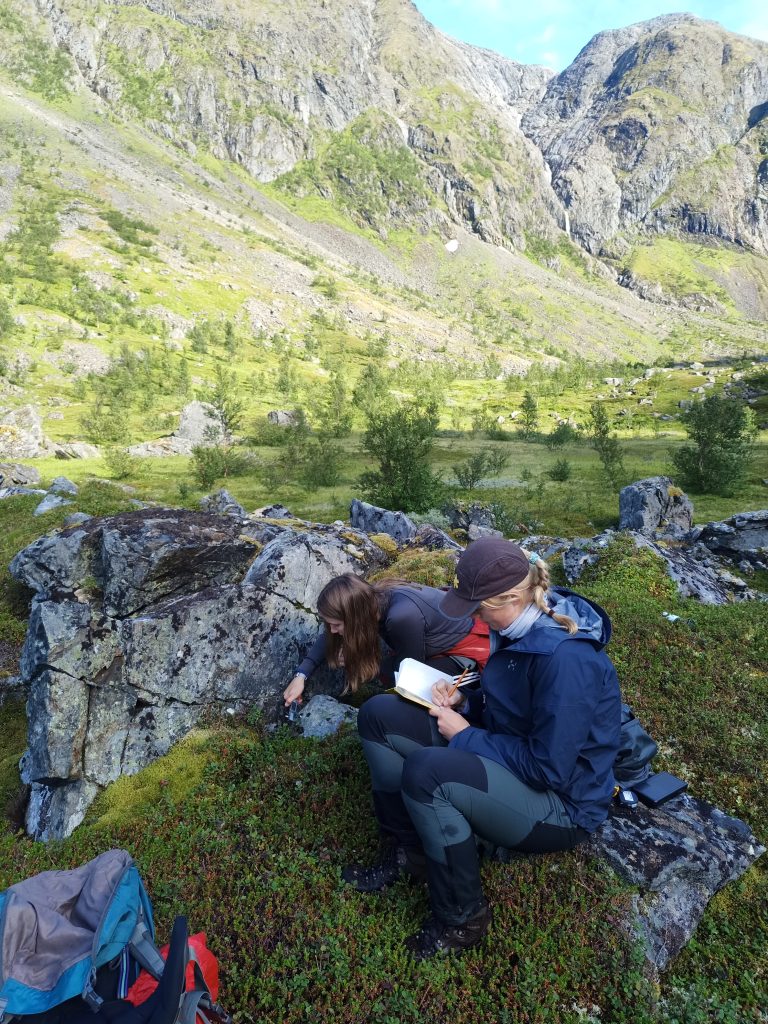
Overall, the field trip was very successful with a lot of data collected. It was very nice that the people of Bergsfjord were very enthusiastic and helpful, and this really helped the project. The lake cores will now be analyzed in EARTHLAB, at the University of Bergen, to obtain different sets of data on the lake sediments.
No responses yet