
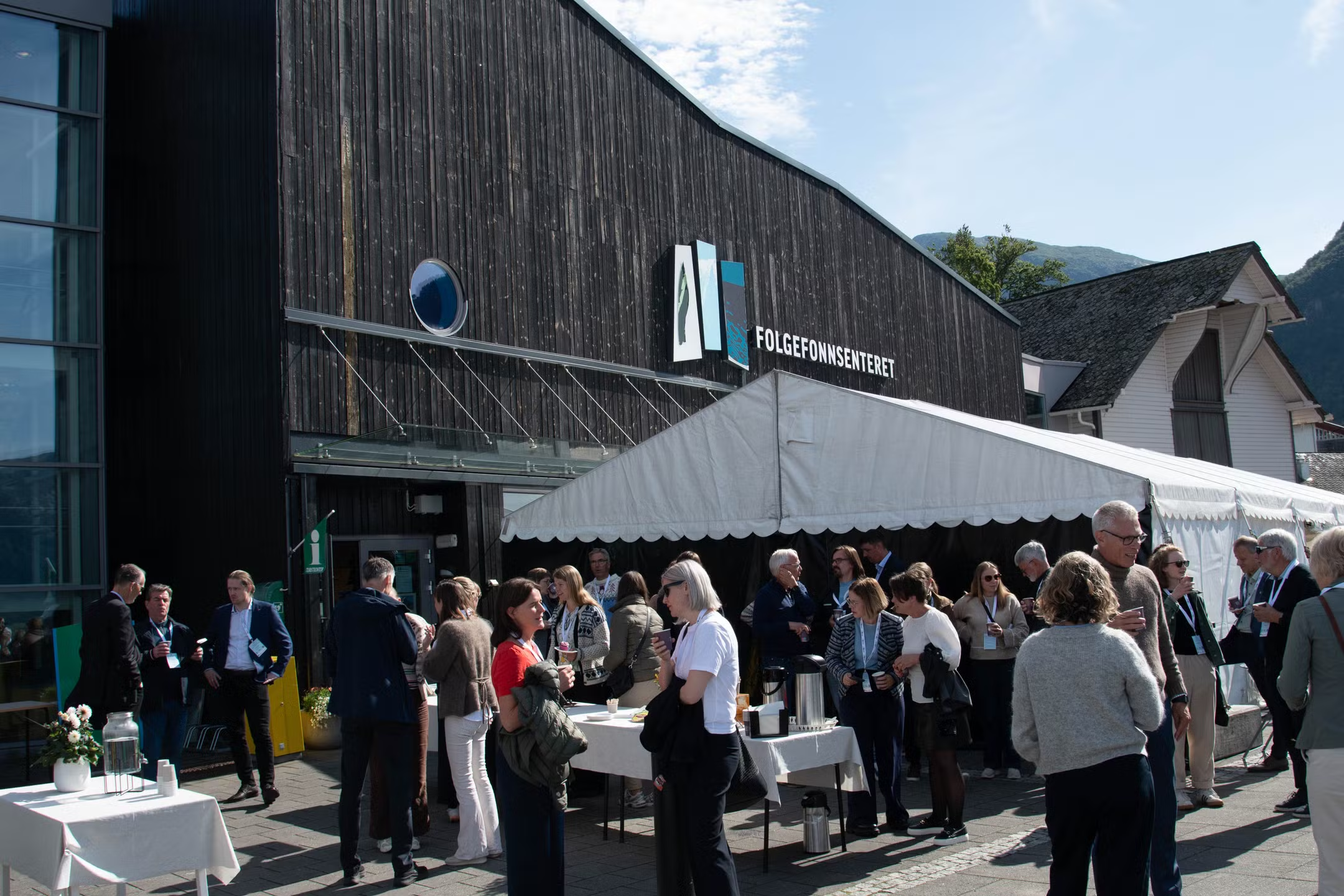
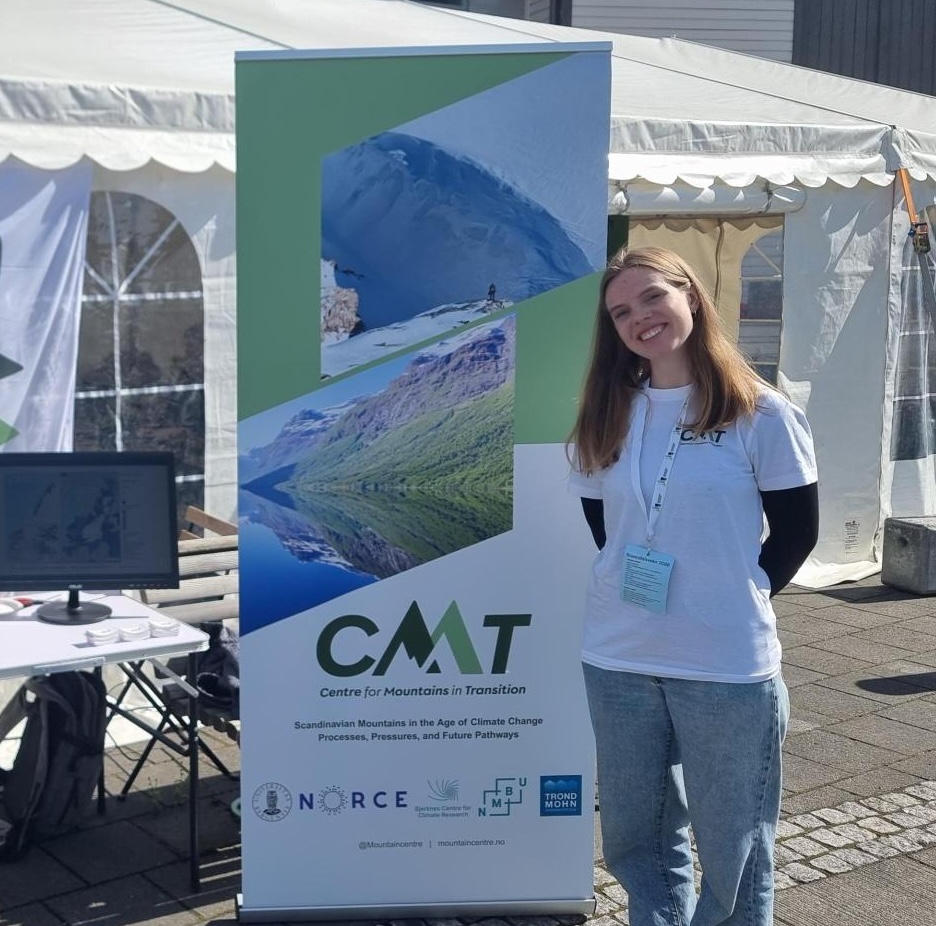
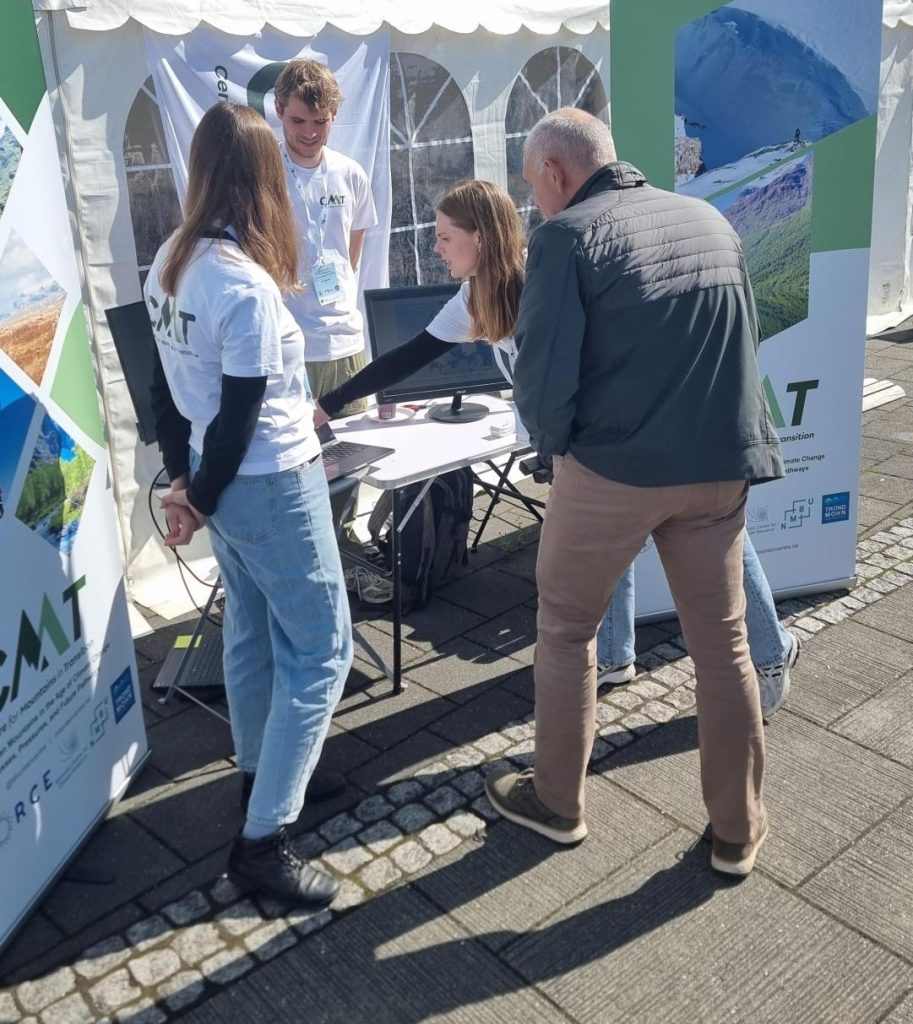
This week, CMT attended Rosendalsveko to represent the mountain centre and spread awareness of what we do. This is a significant event for us, as it is the first conference at which the center’s work was showcased. Rosendalsveko is a unique event since it merges politics, business, environmentalism and science to make informed decisions about climate adaptation. The Phd students attending were thrilled to participate in such a high-level event and showcase their work at their stand.
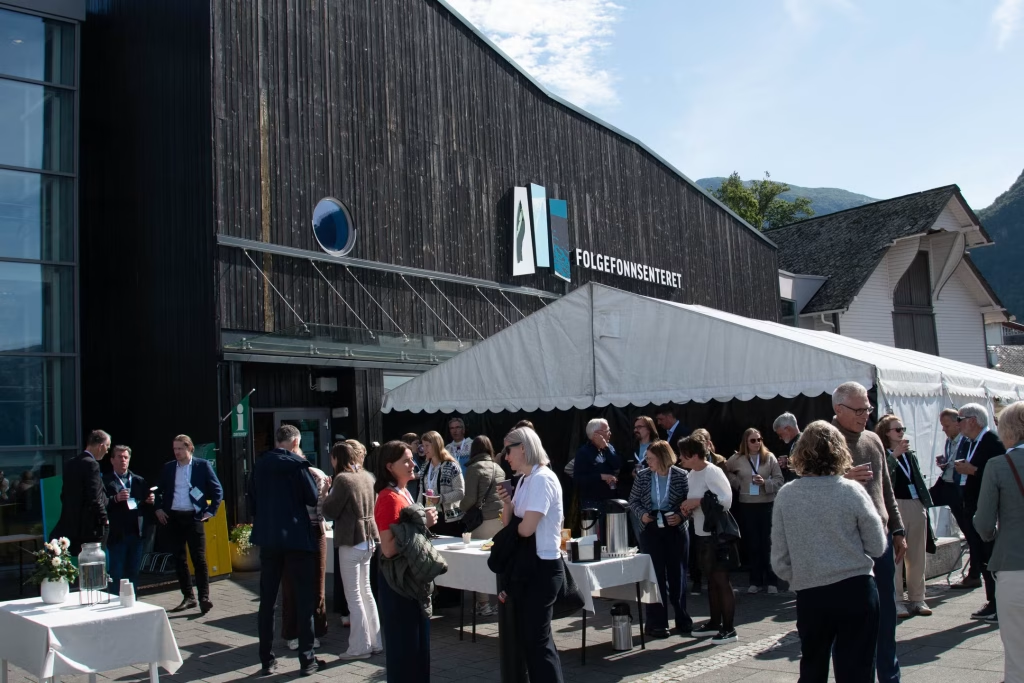
This year’s theme was “Climate adaptation – from knowledge to action”, hosted in Rosendal at the Folgefonnsenteret. For CMT, Folgefonna National Park is like a science laboratory, with multiple researchers using the area as a study site – in biology, meteorology, remote sensing, hydrology, snow and ice. In order to make an impact with this work, it’s important to understand how politicians approach local climate-related issues, in order to frame the research in a way that will be well-received.

The focus of the conference was aquaculture, renewable energy supply and the delicate balance between industrialisation and wilderness preservation. The event had presentations and numerous panels with representatives of a wide range of perspectives. Politicians representing multiple parties, climate leaders of the local municipality and the Storting, senior researchers in all aspects of the climate system from UiB, Norce, Institute for Marine Research, The Norwegian Meteorological Institute, Vestlandsforsking. There were representatives from many businesses and NGOs, DNT for friluftsliv and nature, BKK for energy supply, Bremnes Seashore and Lerøy for salmon farming, Naturenforbundet for environmental protection – among others. The impressive range of perspectives made for engaging discussions.
A running theme was the Nature crisis in Norway, with wilderness areas decreasing from 50% to 11% over the past century. There were some great discussions about who should hold the power when committing to new infrastructure projects, – is it more valuable to build a data center, or clear a large area for cabin development? The municipalities can make the most informed and democratic decisions for their area, but how can this be compatible with a national net zero in nature loss? And what decision should be made if despite bringing in jobs and money to a municipality, a project doesn’t justify the destruction of nature for the people that live there?
It was acknowledged that despite the ongoing nature crisis, there is a need to expand the electricity grid. In recent years Norway has gone from a large energy surplus to the supply barely meeting demand, but it is a question what kind of new energy infrastructure is needed, and how to create it without destroying more wild landscapes. A big concern is the expansion of wind farms – while maintaining green energy development they are built in the most wild and remote areas which we desperately want to preserve.
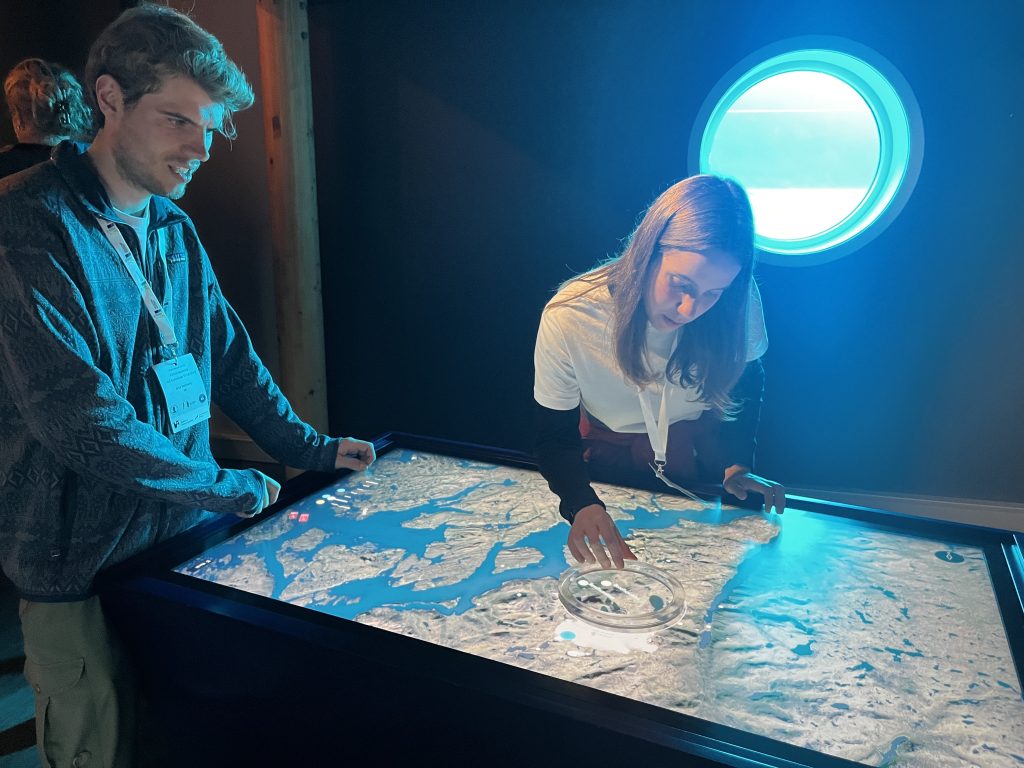
“I was overjoyed to have attended Rosendalsveko. It’s my goal to work in the intersection of science and policy, and this was my first event in this space. I’m new to Norway, so this really helped me understand how to contextualise and communicate my research. I see that unlike in the UK, where I’m from, protecting nature is a strong priority in itself, and it doesn’t need to be tied to economic value. I was also surprised that broader climate change and the oil industry is a lesser discussed topic compared to nature preservation – even though they are interlinked. Understanding how people approach these issues can mean that I can do some good with my work on Folgefonna.” – Polina.
“I experienced it as very useful, mainly gaining more knowledge on what are main topics that are discussed in (local) politics and how people’s views translate into actions. I think this gives better insights in how we as the CMT can present our research and what politicians would find interesting and useful for their work. For next year we will be prepared to present part of our research and address it in a way that can be of high relevance for the politicians and stakeholders.” – Jesse.
No responses yet